Showing posts with label Confession. Show all posts

Wednesday, December 10, 2014

The Lord Does Not Delay

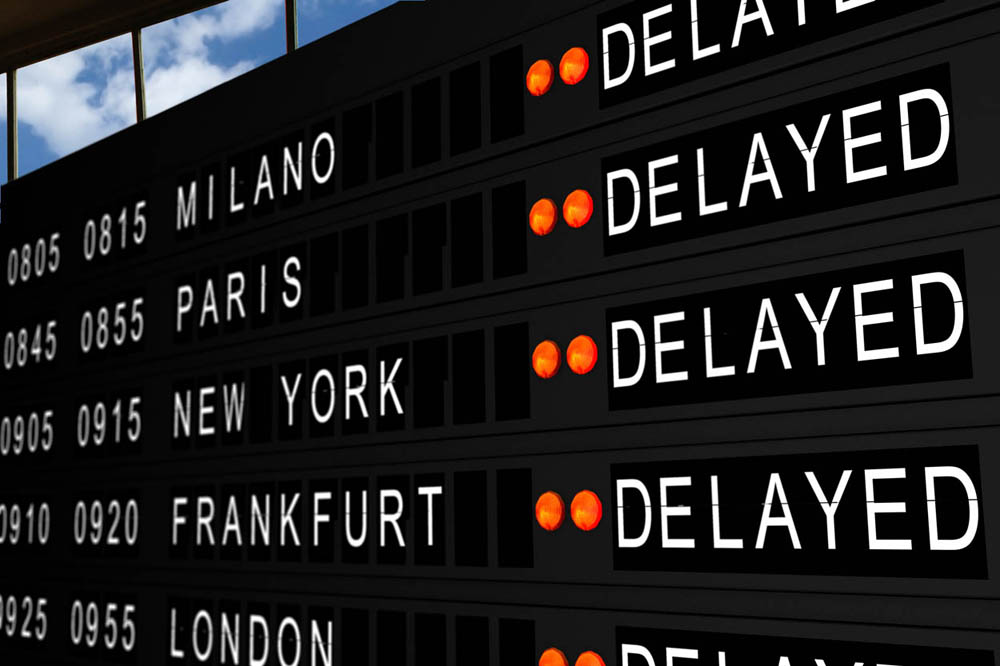
photo credit travelsort.com
Jesus ascended into Heaven almost 2,000 years ago, promising to return. Why is He taking so long to come back? Why doesn’t He just return today and end all the world’s suffering? Is He dawdling? Does He enjoy watching us struggle through life? St. Peter tackled that question in Sunday's second reading: “The Lord does not delay His promise, as some regard ‘delay,’ but He is patient with you.” So God is not dawdling, but He is being patient in His return.

Why the patience?  . . . because there are many people who are not in a good relationship with Him. His patience in returning allows those people more time to come back to Him. God does not wish “that any should perish, but that all should come to repentance.” He is giving us all the more time to develop the best relationship with Him possible. That relationship is determined by the way we live our lives. The choices we make to do what is good and true are choices to draw closer to the source of Goodness and Truth: God Himself. That is why Peter continued: “Since everything is to be dissolved in this way, what sort of persons ought you to be?”

When Jesus returns, St. Peter stated, “everything done on [earth] will be found out.” That is, we will all experience the “General Judgement” where all of everyone’s actions, thoughts, words, and omissions from all time will be known by all. God already knows all of this, but now so too will everyone else. We will see all the good and bad effects of everything we’ve ever done. That’s why St. Peter is so emphatic in encouraging us to be “conducting yourselves in holiness and devotion . . . eager to be found without spot or blemish before Him.”
Hans Memling's The Last Judgment, 1471

This is also why all the other readings on Sunday were about “preparing the way of the Lord.” He is going to come back. How is my relationship with Him? Does it need some improvement? If I have “mountains” or “valleys” of sin that need to be “made low” or “filled in,” how do I do that? The answer is surprisingly simple: tell Him. One good Confession will fill in every valley and make low every mountain, standing as an obstacle to a deeper relationship with Him: “Comfort, give comfort to my people . . . speak tenderly to Jerusalem . . . her guilt is expiated!”

Trying to be the sort of person I ought to be,
Casey Truelove

Sunday, November 3, 2013

We Only Keep the Photos We Like


Yesterday, my family went to a park, and we took many photos. The photo above stood out, however, as particularly beautiful in how it captured the expression of pure joy as my daughter, Miriam, experienced swinging for the first time.

Later in the day, my wife and I sorted through all our shots and kept the few that we really liked. This particular shot stood out as beautiful. I recalled how during my childhood years my family would occasionally look back through photos and I would see pictures of myself as I grew. I started to look forward to giving my daughter this opportunity to look back at some beautiful pictures of her childhood.

Through all this, a simple thought struck my mind that really made me think: We only keep the photographs we like. Out of all the photos my wife and I took, we only kept the ones that were beautiful--that moved us in some way. The ones that were blurry or had awkward poses or strange faces were moved to the trash. I thought back to the first time I purged my collection of photographs from boxes and albums. At that time, these were actual, tangible photographs, taken with film and printed on paper. Now, it is simply a matter of deleting an electronic file. I realized then that I didn’t have to cling on to every single snapshot of my past. I have taken thousands and thousands of photos throughout my life, but I only have certain ones that I have retained--only the best ones, the most beautiful and/or the most important.


God’s Photos
Just as we only keep the photographs we like, God desires to keep only the good memories of us. He wants only pictures that He likes, and He offers us the opportunity to get rid of those less-than-stellar shots through Confession. In this act of repentance, we choose to accept His opportunity to turn away from whatever evil we have committed in thought, word, action, or omission. He said to His Apostles (the first Catholic priests): “If you forgive the sins of any, they are forgiven; if you retain the sins of any, they are retained.” (Jn 20:22) God continues to give us Catholic priests today, who are given this power to act as His instruments of forgiveness. God wants to get rid of those blurry, awkward shots from our lives. He wants to only see a life of beauty in each of us, but we have to take Him up on His offer. We have to admit we have done wrong and try to not sin again.


Our Photos of Others
We also have to do the same for others. God said that in order to be forgiven, we must forgive others. 
“Forgive us our trespasses as we forgive those who trespass against us . . . For if you forgive men their trespasses, your heavenly Father also will forgive you; but if you do not forgive men their trespasses, neither will your Father forgive your trespasses.” (Mt 6:12, 14-15, emphasis mine) 
So, God wants to get rid of the bad pictures of us, but we first need to get rid of the bad pictures we have of each other. He wants us to look at the good in others. 

Rather than focussing on the crazy times when Miriam’s teething drives her to bouts of crying that seem unconsolable or focussing on how many hours of sleep we have lost (Amanda more so than me), my wife and I are called to focus on the good in Miriam (like re-viewing this picture of her) . . . and those aren’t even sins! We have to be willing to get rid of those bad photos we hold against others for their offenses. I have to recognize that I’m still holding a grudge against someone: my wife, my brother, my sister, my parents, my relatives, my friends, people at work, in the community, etc. What have they done that I still hold against them? In justice, I naturally want to see something done about this, but in mercy, I need to follow God’s lead and forgive these people. I cannot condone sinful activity, but I must love sinful people (like me).


The Final Album
Eventually, God willing, we will be with God forever in Heaven. In that state there won’t be any bad pictures, only the best. Before we can get there, however, we must go through a final touch-up, a final purging of bad pictures, a purification. St. John told us that nothing unclean can enter Heaven. (Rev. 21:27) So we cannot enter without these pictures being removed. This final purging of the stains of sin is what we call Purgatory.

In the end, those who have “feared God and done what is right” (Acts 10: 35) will be with Him forever. All in Heaven will glorify God’s mercy for forgiving their offenses. They will marvel at His mercy, for He has kept only the best photos.

Trying to keep the best photos,
Casey

Sunday, June 12, 2011

Redemptive Suffering


Redemptive suffering is the concept of being able to suffer for someone else's benefit. It is the basis of Jesus' death on the cross: God took on human flesh man so that He could suffer in His human nature (His divine nature is perfect, so it could not suffer). That suffering was not for some sadistic purpose; rather, it was for atonement. Jesus died on the cross to help us. His death paid the debt of our sins. The picture above is of the "scapegoat" the animal in Jewish culture on whom the people's sins were cast and who was driven away into the desert (a foreshadowing of Jesus who would really take the people's sins away). Every imperfect act of ours separates us from God (who is ultimate perfection) and makes us the devil's property (think of Edmund in the Lion the Witch and the Wardrobe--see the video below, particularly 3:20-5:20).

Sin also enslaves us--it is truly addicting (when we sin, it becomes more habitual to sin again and easier to sin more gravely). Prior to Jesus' death, we had no way of repaying the debt of our sins, so even those "good" people still committed some sins in their lives, and their souls were not in a state where they could enter Heaven.

God loves us so much that He became one of us in order to die for us (see the rest of that movie clip, understanding Aslan as a representation of Jesus). Jesus' death is applied to us particularly through the sacraments. In the Sacrament of Baptism, we are washed with water, but it is not just symbolic; it actually affects our souls. When someone is baptized, he is drowned; His life that he lived up to that point is ended--including all sin (Original Sin, which we inherit from Adam and Eve, and any actual sins, which we have committed up to that point)--and he is raised to a new life for God. The Sacrament of Reconciliation (Confession) applies Jesus' death on the cross to us to forgives us of any sins we commit after Baptism (provided that we are humble enough to own up to them, that we tell them to God through one of His priests, that we are sorry, and that we intend to try not to do them again). The Sacrament of Holy Communion (the Eucharist) is the main sacrament. It is the bread and wine that are changed into Jesus' Body and Blood at Mass every day. Jesus' sacrifice on the cross is made present on the altar at every Catholic Mass. That sacrifice is re-offered to the Father, and then we are allowed to partake in it. We consume what used to be bread/wine and has now become Jesus' Himself. We eat His living Flesh (offered for us) and drink His living Blood (shed for us) under the appearance of bread and wine. God became man to die for us and give us these sacraments (and the 4 others, which I won't go into here).

In the same way, God also allows us to suffer for others. In our pain (of whatever sort: mental, physical, social, etc.), we can unite ourselves with Him on the cross and offer that suffering as a sacrifice to help other people. We understand that all suffering we go through now is trivial compared to the complete joy to be experienced forever in Heaven or (conversely) the complete agony to be experienced forever in Hell. We welcome suffering insofar as it makes us more like Jesus, who suffered for us, and enables us to suffer for others. Though I may have great pain in suffering (and I may lose a lot of temporal goods), it is worth it to save someone's soul from eternal damnation. The suffering through which I go, I can offer up to God because He often wishes to use us as tools for bringing about His mercy. In His mercy, He might grant some sinner extra graces to see the wrongs in his actions, and recognize the harm he causes through his sins. This may be enough for the sinner to repent, to turn back to God and seek forgiveness. That may ultimately lead the sinner to be in Heaven instead of Hell for all of eternity. Thus, the sacrifices we Catholics offer up to God are acts of love--to love is to will for what is ultimately best for someone. While I may not like the daily trials which life throws at me, I recognize that they are opportunities to love people (those around me, or those whom I may never meet). They are opportunities to offer myself up and take their punishment on my flesh, so that they might one day return to a relationship with God avoid eternally separating themselves from Him: "Greater love has no man than this, that a man lay down his life for his friends." [John 15:13]

Saturday, December 4, 2010

The Sacrament of Reconciliation (Penance, Confession, Forgiveness)


On Thursday, our 2nd graders received their First Reconciliation. Beforehand, we invited the families into our parish hall for some last minute preparation. In order to help them better understand Reconciliation, I distributed flyers with the information below and gave an oral presentation on the information. I've edited a little bit since then, but this post is pretty much what we gave them:


God wants each of us to be in a good relationship with Him and with other people. When I sin, I hurt those relationships. Every time I do something bad, I offend other people. More importantly, I offend God, whom I should love above everything. Small sins (venial sins) offend those relationships and they hurt my soul. Serious sins (mortal sins) completely separate me from God, break my relationships with others, and seriously damage my soul.

By human power alone, these broken relationships cannot be re-established--we can't just say we're sorry to heal the whole relationship; it isn't sufficient (that's how great the effect of our sins is). To fix this, God took on human flesh and became a man. He taught, healed people, and forgave people’s sins. Ultimately, He offered His life to cancel the debt of all our sins and to reconcile us to Himself--that's how much He loves us and wants us to be in a good relationship with Him.


Jesus gave us sacraments to apply His crucifixion to us, so that EVERY person could be forgiven. Baptism forgives Original Sin (the sin we inherit from Adam & Eve) AND it forgives any actual sins we have committed up to that point.
  • "Go therefore and make disciples of all nations, baptizing them in the name of the Father and of the Son and of the Holy Spirit, teaching them to observe all that I have commanded you." [Matthew 28:19-20]
  • "Repent, and be baptized every one of you in the name of Jesus Christ for the forgiveness of your sins" [Acts 2:38]
Baptism forgives sins, but someone can only be baptized once--as the creed states, “we believe in ONE baptism.” If someone commits sins after he has been baptized, he cannot be baptized again to be forgiven for those sins.

To forgive sins after Baptism, Jesus gave us the sacrament of Reconciliation. Jesus gave His priests the authority to forgive sins in His name. During confession, Jesus forgives us through His priest. Jesus works through His priests. When we go to Confession, we're actually confessing to God through the priest.

  • "The Son of man has authority on earth to forgive sins." [Matthew 9:6]
  • "As the Father has sent me, even so I send you." [John 20:21]
  • "They glorified God, who had given such authority to men." [Matthew 9:8]
  • "He breathed on [the apostles], and said to them, 'Receive the Holy Spirit. If you forgive the sins of any, they are forgiven; if you retain the sins of any, they are retained.'" [John 20:22-23]
  • "If we confess our sins, He is faithful and just, and will forgive our sins and cleanse us from all unrighteousness." [1 John 1:9]
  • "God, who through Christ reconciled us to Himself and gave us the ministry of reconciliation . . ." [2 Corinthians 5:18]
  • "Confess your sins to one another . . ." [James 5:16]
  • "Many also of those who were now believers came, confessing and divulging their practices." [Acts 19:18]
To restore each of our relationships with Him, God has given us the Sacrament of Reconciliation.

It only takes one good confession to completely wipe away the guilt of my sins and restore me to a perfect relationship with God. No matter how sinful I've been, no matter how far away from God I am, no matter how long I've been away, it only takes one good confession to be back in proper relationship with Him--that's how strong the power of the Crucifixion is, and that power is applied to us through the sacraments.

In the prayer that Jesus taught us, we pray “forgive us our trespasses [sins] as we forgive those who trespass [sin] against us.” [Matthew 6:12] An integral part of being forgiven is forgiving other people. If we really want to be forgiven, we need to first forgive the people who have offended us. Forgiveness does not mean we say that their behavior was good; it means that we no longer hold a grudge against the person for having offended us.

Trying to stay in a great relationship with God,
- Casey

Catholic Ads

Pages