Here are the latest episodes of our podcast The Beauty of Truth:
Showing posts with label Marriage. Show all posts
Showing posts with label Marriage. Show all posts
Sunday, December 2, 2012


Wednesday, May 23, 2012
Austin Catholic New Media
Hey! This is Mrs. Truelove. :) Casey is making mango ice cream right now, and wanted to let you know that I am the most beautiful woman in the world! Bahahahaa!
No. Actually, he wanted me to hop onto his blog while he's busy with the ice cream and let you know that he has started writing for Austin Catholic New Media. His first post, Marriage and Saltwater, was just put up today.
This doesn't mean he is discontinuing this blog, but occasionally he'll be posting over there as well. He hasn't been posting as much on here lately because, well, life happens. I'm sure you all know how that goes. Once school ends, I believe he plans on writing more frequently.
Don't forget to go check out his newest post!
God bless!
Mrs. Truelove
Sunday, January 15, 2012
Infertility & Marriage
Yesterday, a family member sent me a question about this article, which claimed that the Catholic Church was planning to "ban the infertile people's right to marry," claiming that the Church thinks marriage and sex are "ONLY for procreation." She was rightfully incredulous that the Church would do such a thing.
The article makes a couple of bad assumptions before the author even started writing: 1) The Catholic Church makes arbitrary decisions regarding marriage, so She can simply change at will what She considers a marriage. 2) That marriages can be "revoked." Neither of these are the case. The Church has a deep respect for marriage and She recognizes that it can neither be revoked nor changed. Sadly the article has over 1200 tweets and 7000 Facebook likes. (Who would like an article like this? I can understand someone sharing it, but who would actually like these statements? I digress.)
There were many couples in the Bible who were infertile, and only were made fertile by a miracle. The Church has never doubted the validity of these marriages because of their infertility.
My (slightly edited) response follows:
Fertility does not determine validity.
The article makes a couple of bad assumptions before the author even started writing: 1) The Catholic Church makes arbitrary decisions regarding marriage, so She can simply change at will what She considers a marriage. 2) That marriages can be "revoked." Neither of these are the case. The Church has a deep respect for marriage and She recognizes that it can neither be revoked nor changed. Sadly the article has over 1200 tweets and 7000 Facebook likes. (Who would like an article like this? I can understand someone sharing it, but who would actually like these statements? I digress.)
There were many couples in the Bible who were infertile, and only were made fertile by a miracle. The Church has never doubted the validity of these marriages because of their infertility.
My (slightly edited) response follows:
You're right. This article is bogus. It's a common misunderstanding, stemming from a very poor grasp of what the Church actually teaches. People have a tendency to read what they want to read into what the Church states, so there is a LOT of misinformation out there.Also, let's recognize that it is nearly impossible to distinguish between a couple who is infertile and a couple that simply hasn't had kids yet. There is no way that the Church could possibly make such determinations.
The Church has never stated that marriage and sex are ONLY about procreation. There never has been anything preventing infertile couples from getting married, and there never will be (see Canon Law 1084§3). The Church understands that the marital act is about 1) the procreation of children, 2) the rearing of any children who might come, AND 3) the deepening of the gift to each other that each spouse makes to the other of his or her entire self (the marital act is the greatest physical expression we can make of that gift of our entire selves to each other).
#3 is an absolute must, but it's inherent to the marital act, so it is taken for granted that people are giving themselves to each other. The only situation I can think of that this would not happen is if one spouse raped the other--this wouldn't be a gift of self to the other; rather, it would be a taking of the other person as an object. It's also possible, I guess, that a couple might use each other strictly for physical pleasure, and not give themselves to each other. Both of those would be sins, and it would obviously hurt their relationship, but they could still be married because they only need to give themselves to each other once to consummate the marriage.
To have a valid marriage the Church teaches that they have to be free to marry (i.e. not married to anyone else, be only 1 man/1 woman, not be a priest or anyone else who has made a permanent vow of celibacy, etc.--see the specific impediments to marriage). They have to publicly give themselves to each other (see consent) in whatever official manner is custom for them (if at least one is Catholic, it must occur within a Catholic wedding ceremony--see form), and they have to properly commit the marital act at least one time. If they have done that they have consummated the marriage and it cannot be taken away from them, no matter what sins they have committed with each other.
The Church teaches that, during each marital act, the couple has to be OPEN to #1-2, but it doesn't ever actually have to happen. Each time they make love, they must allow God to give them children, if He wants. The couple would only be sinning if they were to frustrate their marital acts from becoming fruitful (i.e. contraception, onanism, etc.). If, however, the couple discerned that they were not able to raise a child at that time, they could simply not commit the marital act on the few fertile days in the woman's cycle, and there would be no sin.
If procreation was what made marriages valid, then no marriage would be valid until the couple had conceived a child, which would make all marriages invalid at the beginning, so the couple would have to sin by sleeping with a person with whom they were not validly married so they could conceive a child in order to make their marriage valid. This is obviously not the case.
The only situation like this where people would actually be prevented from getting married is if they were physically incapable of consummating the marriage (Canon 1084§1). With today's great availability of medical advances, that condition is almost unheard of. Even if there is a doubt to the impotence of the couple, the marriage is still considered valid (Canon 1084§2). Even in that situation (this is just my guess here, nothing official), one MIGHT be able to get a dispensation for a Josephite marriage.
The Church has never stated that marriage and sex are ONLY about procreation. There never has been anything preventing infertile couples from getting married, and there never will be (see Canon Law 1084§3). The Church understands that the marital act is about 1) the procreation of children, 2) the rearing of any children who might come, AND 3) the deepening of the gift to each other that each spouse makes to the other of his or her entire self (the marital act is the greatest physical expression we can make of that gift of our entire selves to each other).
#3 is an absolute must, but it's inherent to the marital act, so it is taken for granted that people are giving themselves to each other. The only situation I can think of that this would not happen is if one spouse raped the other--this wouldn't be a gift of self to the other; rather, it would be a taking of the other person as an object. It's also possible, I guess, that a couple might use each other strictly for physical pleasure, and not give themselves to each other. Both of those would be sins, and it would obviously hurt their relationship, but they could still be married because they only need to give themselves to each other once to consummate the marriage.
To have a valid marriage the Church teaches that they have to be free to marry (i.e. not married to anyone else, be only 1 man/1 woman, not be a priest or anyone else who has made a permanent vow of celibacy, etc.--see the specific impediments to marriage). They have to publicly give themselves to each other (see consent) in whatever official manner is custom for them (if at least one is Catholic, it must occur within a Catholic wedding ceremony--see form), and they have to properly commit the marital act at least one time. If they have done that they have consummated the marriage and it cannot be taken away from them, no matter what sins they have committed with each other.
The Church teaches that, during each marital act, the couple has to be OPEN to #1-2, but it doesn't ever actually have to happen. Each time they make love, they must allow God to give them children, if He wants. The couple would only be sinning if they were to frustrate their marital acts from becoming fruitful (i.e. contraception, onanism, etc.). If, however, the couple discerned that they were not able to raise a child at that time, they could simply not commit the marital act on the few fertile days in the woman's cycle, and there would be no sin.
If procreation was what made marriages valid, then no marriage would be valid until the couple had conceived a child, which would make all marriages invalid at the beginning, so the couple would have to sin by sleeping with a person with whom they were not validly married so they could conceive a child in order to make their marriage valid. This is obviously not the case.
The only situation like this where people would actually be prevented from getting married is if they were physically incapable of consummating the marriage (see impotence: Canon 1084§1). With today's great availability of medical advances, that condition is almost unheard of. Even if there is a doubt to the impotence of the couple, the marriage is still considered valid (Canon 1084§2). Even in that situation (this is just my guess here, nothing official), one MIGHT be able to get a dispensation for a Josephite marriage.
Fertility does not determine validity.
Saturday, July 2, 2011
The Importance of Proper Definition
I have been in a discussion lately regarding marriage, and the reaction to the State of New York’s decision to start calling same sex relationships “marriages.” One of my interlocutors thought that when I had distinguished between valid marriages and invalid marriages, I was saying that all non-Catholic marriages were invalid (and how unfair that would be). This was obviously not the case, and I will explain it below. Another was having a similar difficulty. Both were confused about the distinction yet validity of religious marriages and non religious marriages, and they were confused about the idea that marriage means more that simply a "boyfriend and girlfriend telling the state of their love." The discussion stemmed from a response to an article, which included the above statement and claimed that by redefining marriage to include same sex couples, the state effectively undefined marriage, and that there is a great loss in this.
 |
| Photo courtesy of Isela Maria Photography |
First, let’s get things straight. God is involved in all marriages, whether the vows are expressed in a religious setting or not. When my wife and I exchanged our vows in the traditional Catholic wedding Mass, God was (and is) involved in our marriage. When a non-Christian man and woman go to the justice of the peace and get married, God is involved in that marriage too. The only time God does not unite a couple in marriage is when a marriage is prevented by some impediment from coming about. This is discussed below.
Marriage is a thing into which the couple enters, not something the state created for couples to enter. What the state chooses to recognize as “marriage” has no effect as to whether the couple is, in reality, married or not. The state could call anything a marriage, but that doesn’t bring a marriage into existence. Similarly, the state could legally call an apple an “orange,” but that doesn’t make the apple an orange. Would such a redefinition preclude the orange from being an orange? No. Does such a redefinition remove the state’s distinction between apples and oranges? Yes. Is something lost? Yes, it becomes harder for the average person to truly understand what an orange is, as distinct from what an apple is.
 |
| Photo found here |
Particularly with regard to the question about the distinction of Catholic marriages: There are two different levels of marriage: natural and sacramental. If a marriage is valid, it is always at least a natural marriage. My marriage is a natural marriage. The marriage between a non-Christian man and woman would also be a natural marriage. Both of those marriages are valid marriages. The particular Christian extra is that marriages between baptized persons are also sacramental--that is, they cause grace in the lives of the couple (a discussion for another time). My marriage is not only natural, but it is also supernatural (sacramental). The catch, with respect to our conversation, is that it takes certain requirements for a marriage to be valid (for various reasons, generally revolving around the fundamental definition that marriage is a full gift of self to the each other) including, but not limited to:
- Marriage can only come about between two people - a full gift of self can only be given to one person, otherwise it is a divided gift. (This rules out polyamory.) This statement also requires that the parties be humans--animals plants and inanimate things are unable to consciously choose to give themselves, so they cannot enter marriage. (A man could not marry his cow.)
- Marriage can only come about between willing people - it is not a gift of self at all if the persons are unwilling. (Shotgun weddings are generally invalid--even though the state would recognize them.) Here is it helpful to note that even arranged marriages are entered into willingly (only the bride and groom don’t get to choose the person to whom they give themselves), so they are completely valid.
- In order to be willing, a man and a woman need to know the covenant to which they're vowing themselves. You can't totally agree to give yourself fully to another person for the rest of your life without a minimal understanding of what that really means. This area is greatly effected in our society. With the continual redefinition/undefinition of marriage, it becomes harder and harder for couples to know what marriage truly is, so it is harder for them to fully give themselves to each other.
- If either the man, the woman, or both is/are a Catholic, the wedding must take place according to the rules of the Catholic Church (in a Catholic church, by a Catholic priest/deacon, they must intend to raise their children as Catholics, and they must conform to all of the other requirements for marriage). Catholics are not free to get married on the beach, in the forest, in a mansion, or elsewhere. Doing so fails to bring about a marriage. They are not married. They can always have their marriage convalidated by the Church, so that it becomes real, but they remain unmarried otherwise (even if the state considers them married).
- Marriage can only come about between people who are able to give themselves - the mentally retarded, the insane, and similar others lack the capacity to truly choose to give themselves to another person for as long as they both shall live. This lack of the ability to give themselves prevents those people from entering a state of self-gift. (The drunk are also not able to give themselves at the time, so drunken Vegas weddings are generally not valid--even if the state recognizes them. This couple could always convalidate their marriage later.)
- The couple must be able to consummate their marriage at least once - if the couple is unable to complete the marital act, they cannot consummate (“bring to perfection”) their gift of self to each other. A man who cannot become erect cannot consummate a marriage. I have heard of cases of women who are unable to receive a man--they would be unable to consummate a marriage. The marriage must be consummated by at least one marital act. The marital act does not need to be a fertile act, but it needs to be the KIND of act that would be fertile. The marital act is the act by which a man and woman would normally generate children (the man must climax within the woman’s vagina--wether or not they are fertile). If the couple is unable to perform this function, they cannot consummate the marriage, so they are unable to give themselves fully to each other. (*As an aside, when a couple forcibly removes their fertility from this act--through contraception, etc.--they change the act which they are performing, reserving themselves from giving a full gift and failing to perform the marital act, so a contracepted act wouldn't consummate a marriage.*) This act doesn’t need to generate children, but it must be the same act by which children would normally be generated. That being said, obviously a man cannot climax within another man’s vagina (because the other man has no vagina). Men cannot FULLY give themselves (fertility and all) to men. The same goes for women--they cannot FULLY give themselves (fertility and all) to women. Same sex couples cannot enter into a real marriage. No matter what the state calls their relationship, same sex couples lack the ability to enter the reality of what marriage is because they lack the fundamental elements (one man and one woman).
Marriage, by its nature, is ordered to the procreation and education of children. Not every marriage will generate children, but marriage requires the KIND of people who would normally be able to give themselves to each other so fully that their self-giving love MIGHT produce another life. (An infertile man and woman may marry each other because they are the KIND of relationship that is necessary.) Anything else is not a marriage. The state may call it a “marriage,” but that’s like the state calling an apple an “orange”--it doesn’t make it so.
To the next point: is anything lost by this altered definition of marriage? Yes, but the loss is subtle (great, but subtle). Over the last century, we have seen a great breakdown in the family unit. This has been caused by a societal watering-down of the understanding of what it means to "be married" and to "be a family." Much of this has been because of the disassociation of marriage and the marital act. Instead of the marital act being looked at as the fullest gift of husband and wife to each other possible, society has slowly turned it into a mere pleasure act. To be sure, there is much pleasure involved, and that is good, but sexual intercourse purely for pleasure robs it of such self-giving properties. It becomes a form of using the other person for mutual pleasure--even if consensual, it fails to be a true gift. When society treats the marital act as though it’s just a pleasure time, why should it treat marriage like it’s anything special? Problems like adultery have been troubling mankind for practically as long as history records, but should they be considered acceptable? No! We know people shouldn’t cheat on their spouses. Our society, however, has slowly started to brush that problem (and others) under the carpet.
Widespread contraception was one of the first big falls. First, it removed the telltale sign of infidelity--another woman’s pregnancy--but it also dissociated the marital act from being open to generate children, which only stoked the burning fires of lust (sexual intercourse for pleasure instead of pleasure as a part of marital self-gift). This split between marriage and the marital act also gives any man who views women as sexual objects further leeway to treat them as such. It also greatly increases the temptation for men who otherwise wouldn’t treat women as objects to treat them as such--and vice versa. The same can be said for abortion, which became the fail-safe for contracepting couples. Preventing and killing babies from such illicit relationships made it easier for the relationships to occur, and they became more common, more mainstream--such relationships are even lauded in television shows. All of this erodes at the definition of marriage--they are both the sign of a lower view of marriage and contributors to lowering it further.
As our society’s view of marriage lowered, divorce became more prevalent, and to make this easier, lawmakers created “no-fault” divorce, which only further lowered the view of marriage. Not only is marriage separated from the marital act in society’s eyes, but they now look at marriage as a relationship of convenience. While stating, “until death do we part,” people are often really thinking, “as long as I feel good and he/she meets all my needs, but if things turn sour, we’ll just get a divorce.”
Adultery and fornication both went rampant, exploding in the 1960s and 70s. These vices which have historically been seen as evil, were now being seen as not only acceptable, but “freeing.” This libertine “freedom” (which is really just a license to indulge in lust, and become enslaved to one’s passions) has led to a further deterioration of society’s view of the family. As contraception became more available and society’s general view of marriage lowered, the increase of divorce, teen pregnancy, out of wedlock pregnancy, single families, spousal abuse, etc. skyrocketed. The more a society deviates in its understanding from what marriage really is (1 man and 1 woman, committed to giving themselves to each other for a deepening love, for generation and education of any children they might be given as the building block of society, for as long as they are alive), the more prevalent marital evils (divorce, teen pregnancy, infidelity, abuse, etc.) will be in that society.
Has something been lost? Yes. Our society no longer knows what marriage really is, so it will seemingly label anything it wishes a “marriage.” (What is the next apple to be called an “orange?” It looks most likely that the polyamorous crowd will be the next to push their agenda, but I assume they will wait and push the gay agenda first to first try to more fully establish the same sex crowd and lessen the understanding of marriage further before trying to add more partners). With same sex relationships now being called “marriages” by some state governments, it is a further erosion of the real definition of marriage, which will result in a further increase of our society’s marital ills. Unfortunately, people often only live up to the minimum expectation you give them, and as you keep expecting less and less from marriages, they will keep giving themselves less and less to a relationship that requires to give themselves fully. Marriage and family are the building block of society. Our society will not thrive on a faulty foundation--in fact, it is nearly guaranteed to get worse. As we keep lowering our society’s expectations of marriage, we will continue to see worse rates of marital and social evils in our country.
There is a silver lining. Individuals can resist. People can come to learn the real definition of marriage and try to live up to the higher standard to which truly married couples are called. They can raise children who understand marriage and plan to fully give themselves (for life) into a marriage (if God so calls them to that state someday). That’s what my family is doing, and we are not alone. We are just one couple among millions who understand what marriage really is, and we have pledged to live up to that calling, and to teach our children to live up to that calling.
Lastly, and perhaps, most importantly, we can pray. We can pray that God helps us to understand marriage even more deeply, and we can pray for mercy for any time we have offended the truth of marriage, and for mercy on others who have committed offenses against the truth of marriage. We can also pray for mercy on us as a country, for the country's offenses against the truth of marriage.
“Father, forgive them; for they know not what they do.”
Saturday, June 25, 2011
Deals in the Dark
I just saw the news over at Whispers in the Logia that the New York state government has redefined its own understanding of marriage. He quoted Bishop Nicholas DiMarzio of Brooklyn: "It is mystifying that this bill would be passed on the last day of an extended session under the cover of darkness."

To me, this resounds of another political action that took place at a "special session," under the cover of darkness . . .
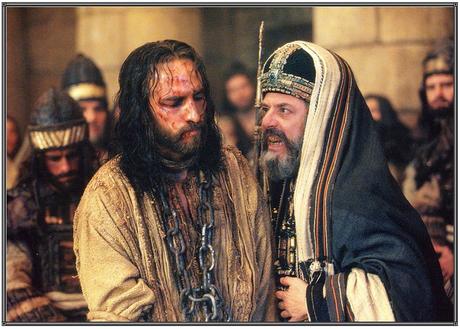
Men, who think they have power, casting out what is truly good in exchange for what is politically favorable.
This is a sad day for the State of New York, and for our nation. We have divorced ourselves from the true definition of marriage, and offered instead a cheap whore.
Thursday, June 23, 2011
Abram's Unrighteousness
 |
Sarah Supplies Abraham Hagar by Adriaen van der Werff |
In today's 1st reading, we hear of the account of Abram, Sarai, and Hagar (Genesis 16). I have often seen people misinterpret this chapter or use it to prove what it speaks against. It has to be understood in the proper context. To get a bit of that, let's look at yesterday's reading (Genesis 15:1-18).
In Genesis 15, God tells Abram (who is at this point childless) that he will have a son. In fact, He tells Abram that his descendants will be as numerous as the stars. At this time, Abram and Sarai are quite old--beyond child-bearing years--but Abram trusts God anyway, and God "credited it to him as an act of righteousness"(Gen 15:6). That was good; Abram trusted what God said. Unfortunately, He didn't trust God enough to make it happen. After not conceiving for a while, Sarai thinks: maybe this son isn't supposed to come through me, so (instead of turning to God for help) she devises a plan to ensure that her husband has the promised heir. She offers her maid, Hagar, to her husband as a concubine. Though this may have been a custom for some people at the time, this was not what God wanted.
God created man and woman to enter into a marriage and remain in that marriage "until death do they part," and the only way God wants man and woman to commit the marital act is within a marriage. God created the first covenant with Adam, the husband of a marriage. Here, Abram broke his marriage covenant by sleeping with a woman who was not his wife--both an offense against his wife (even though it was her idea) and an offense against God's first covenant with man. As always, when a seed is planted by a bad act, bad fruits come.
Abram is generally looked at as a great man, and that he was, but he was not perfect. Here (and in other places) he chose poorly. Although he was trying to do what he thought God might possibly want, he forsook his conscience in order to accomplish the task. He chose to get an heir "his way." To be sure, Sarai and Hagar were complicit in the act, so they were all accountable--they chose to get an heir "their way." They all broke the marriage covenant, and there were consequences. Too often, I have heard people try to use this account as an argument against the Judeo-Christian view of marriage. They just don't get it. Not every story in the Bible shows how to do things rightly--often it shows how not to do things, and this is one of them. Lesson of the day: don't commit the marital act with someone who is not your spouse (also, there are right ways and wrong ways to bring a child into this world: don't try to have a baby in a way that God does not want).
As we continue to read, we will see that the son of this union (Ishmael) is not the heir that God promised; Isaac is that man. As God's messenger predicted (verse 12), much strife between Hagar/Ishmael and Abra(ha)m's true heir, Isaac will come. This will lead to great contention and battles down through the years. The Muslims claim their lineage through Ishmael. The Christians & Jews claim their lineage through Isaac. Thus, we see in the many wars between Muslims and Christians/Jews that Ishmael and Isaac have been fighting down through the centuries, and it all started with a sin against the covenant of marriage. Obviously this story is one of what not to do.
Saturday, February 26, 2011
M.A. Thesis Presentation
Below is a video of the presentation of my M.A. thesis: Sacrificial Aspects Of The Eucharist And Marriage.
Part 1 (10:00)
Part 2 (10:00)
Part 3 (4:36)
Sunday, November 7, 2010
Same Sex Marriage: Why Not?
Drawing from law, biology, and sociology Dr. Jennifer Roback Morse - a former Yale professor - presents a rational demonstration about some hidden dangers involved in calling same-sex relationships "marriages."
Part 1
Part 2
Part 3
Part 1
Part 4
Saturday, September 4, 2010
Marriage: Validity & Indissolubility (Part 2)

Last entry, I focussed intensely on what it takes for a marriage to be validly entered and gave examples of how my wife, Amanda, and I are able to be confident that we have a valid marriage.
This time, I wish to pursue my real goal behind this endeavor: discussing indissolubility. Last post, I stated:
“When entered into validly, nothing can break a marriage covenant, but death . . . 1) In order for the marriage covenant to truly exist, it must be validly entered [which I established]. 2) Once entered, the marriage covenant between the two people exists until one of them dies.”
. . . for better, for worse, for richer, for poorer, in sickness and in health, ‘till death do we part. We commonly recognize these (or similar) words as the vows of those entering into marriage. My wife and I used the Catholic standard vows:
I, Casey, take you, Amanda, to be my wife. I promise to be true to you in good times and in bad, in sickness and in health. I will love you and honor you all the days of my life.
. . . but it’s the same vow because it's entering into the same covenant. Have you ever stopped to think about what this really means? Let’s reflect for a minute.
Entering into the covenant of marriage is a great responsibility, which one professes before God, one’s spouse, and one's community. When we say we “are married,” my wife and I recognize that this is so on multiple levels:
- First, the government thinks we’re married. The State of Michigan validated our marriage license application and it was signed by the priest, so, according to the state, we’re officially married: we have a legal bond with each other. This is, more or less, a formality and not really the major goal of what she and I were after.
- Second, the Church thinks that we were married. As far as She is able, Holy Mother Church, from Her exterior view (and from the recommendation of the priest on our interior dispositions) thinks we are married. The Church thinks so highly of marriage that She assumes that all marriages are valid unless proven otherwise. [Who wouldn’t think a couple is married? They went through the ceremony; they said: “I do.” If those are your thoughts, please refer back to my previous post about validity for a few ideas about what would make a marriage invalid, even though the couple went through a ceremony.]
- Finally, and most importantly, God thinks we’re married--in fact, God knows that we’re married. Moreover, He’s the One Who designed real marriage and allowed Amanda and I the opportunity to give ourselves to each other (such that we are married) to begin with. We are married not only in our thoughts, in the thoughts of our friends and families, in the eyes of the state, or even just in the eyes of the Church, but we’re married IN REALITY. Not only is there the legal bond between us, of which the state is in charge, but a REAL bond exists between us. This is what Catholics mean when we refer to a couple as being married "in the eyes of God."
Indissolubility
This real bond between Amanda and I is that for which we vowed. We recognize that nothing can break this bond (not the state, not us, not anyone else). We have been joined by God Himself and “what God has joined, no man can separate” (c.f. Matthew 19:6). We fully recognize that, no matter what happens, we are called to love and honor each other for the rest of our lives. Honoring our vows is a HUGE responsibility. Let’s say, God forbid, something really bad happens to us. No matter what, we still honor those vows. Let me discuss some extreme examples:
- Major Injury/Disease - Let's say that Amanda were to get into a huge car accident (or developed some majorly debilitating disease) and she was comatose, barely alive and the doctors thought that for the rest of her life, she would be non-responsive. She has a normal life expectancy of at least another 50-60 years. This would mean that probably for the rest of my life, I would no longer have her conscious company and I would not be free to enter into any other relationship. I would still be married to her as long as we are both still living. This would be a great cross to carry for the rest of my life, but that is the vow I made before God and that is the vow I will honor as long as we both shall live. I will live out my role as her husband and pray for her soul that she may be spared the punishment that any sins she may have committed would have earned her. I would offer her soul to God and I would live a life (however lonely) by her side as long as I still breathe. God-willing, one day we will both be glorifying God together in Heaven (though, at that point we would no longer be married--c.f. Matthew 22:30). That would be the truly loving way to live out the vow.
- Mental Disease - What if Amanda developed some form of mental disorder whereby she either didn't recognize me and was afraid of me or (worse) hated me? Even in this state, I would be called to love her. Even if she were to run/move away, I would be called to love her as my wife, even though she no longer recognized our relationship. I must still recognize our marriage, pray for her return to sanity and her return to me. That may or may not ever happen, but that would be my calling. That is the only way to live out the vow: for better, for worse, 'till death. That would be the proper way to love her.
- Danger - What if that mental disease caused Amanda to become extremely violent to me and/or any children we may one day have? In this situation, I would be called to love her from a safe distance as long as the real threat of violence perdured. Temporary separation, for one reason or another is allowable. In this instance, it would be justified to have her committed or at least for me (and the kids) to move out during this time. We would still be married, but I would have to love her remotely for both of our sakes and/or any children's sakes. I would pray for her to return to sanity and hopefully she would be led there. The fidelity through such fear and strife is the way to truly love her and live out the vow.
- Infidelity - This would never happen, but for the sake of illustrating the worst case scenario, allow me to push the envelope. What if Amanda were to be unfaithful to me? Worse, what if this were not an isolated incident: what if she were to run away with another man? She would obviously not be living out her end of the vow, but what would be my responsibility in that instance? I would be called to remain faithful. No matter how unfaithful she might be, I am called to live out my vow. I would be called to pray for her soul, for her conversion, for her return. It may or may not ever happen, but as long as we both should live, we would both be married and I would be called to act as her husband. Even if it has been 20 or 30 years since I had last heard from her, I would still be her husband. Again, it would be an arduously long and lonely road down which I must carry that cross, but I signed up for fidelity through thick or thin. I would still love her and all those years of bearing my burden of loneliness would be my sacrifice for her and for God. That would be my duty. That sacrifice (united to that of Jesus' sacrifice on the Cross) might be what ultimately saves her soul. That would be the way of true love.
- Forced Separation - I don't know how this would happen, but let's just say that the US was invaded by some foreign country--for humor and proximity, let's use the Canadians. So, the Canadian army sweeps down into America and has a big problem with the Church (let's face it, Canada's government hasn't been to kind to her lately), so they start deporting all Catholic bishops, priests, deacons and teachers and separating them from their families. Even if I were taken into a Canadian concentration camp for the rest of my life, Amanda would be called to remain faithful to me (and I to her). This scenario would leave us both lonely and longing for each other. We would pray and work toward our reunion, and if God allowed it to be, it would be wonderful, but as long as we haven't heard otherwise, we would assume that the other still lives and would live up to our vows. This would be how to truly love each other in that setting.
"What about a divorce?" one might ask. In our society of no-fault divorce (more or less on demand), there could easily be a situation whereby spouse #1 is living out the marriage vow while spouse #2 is not, and eventually #2 files for a divorce and receives it. What has happened? How does spouse #1 live this out? If we have a proper understanding of the two bonds in a marriage, we can understand what has happened in the divorce: the state no longer thinks that the couple is married. Does that mean that they're not really married? No. It means that the legal bond has been broken, but the real bond still exists. Does this free the spouses to marry? No, it doesn't. Although the state might consider them legally free to marry other persons, they are still, in reality, bound to each other. The state didn't create marriage and has no real say over what marriage actually is. No matter how hard they try, they will never be able to achieve a different real marriage bond unless the previous spouse has died. Divorce has no effect on the real bond. Knowing that Amanda and I are definitely married, we are comforted by the surety of knowing that nothing can ever take us apart, not even us.
Didn't Jesus say that divorce was okay in certain situations? No, He didn't. He said:
"For your hardness of heart Moses allowed you to divorce your wives, but from the beginning it was not so. And I say to you: whoever divorces his wife, except for [porneia], and marries another, commits adultery." [Matthew 19:8-9]
What is this porneia? Is it some sort of exception? Some translate it as "unchastity," "adultery," "concubinage," or "immorality," but none of these really gets the idea of the Greek term porneia. The basic idea of porneia is that it is a situation so perverted that no real marriage could have existed in the first place. These would be relationships that are incestuous, homosexual, etc. In today's reading from Paul's first letter to the Corinthians (5:1-8), he also uses the word porneia. Paul is describing a situation where a man is living with his father's wife. Whether this is his mom or his step-mom, this man is in an incestuous or (at least) quasi-incestuous relationship with a woman who is already married to someone else. Their relationship is obviously not able to be a marriage. Because they are living as thought they are married, that relationship is described as porneia.
A relationship described as porneia would have been one which could never be a valid marriage in the first place. In such cases there is no divorce on the level of reality. There may be a legal divorce to make sure that no legal bond exists between the two, but such a divorce would have no effect on their reality because no real bond ever existed. "What therefore, God has put together . . . " [i.e. when there actually is a real bond] "let not man put asunder" (Matthew 19:6). Not even a divorce can change the real bond of marriage.
What about annulments; aren't they just Catholic divorces? No, an annulment is a statement that the marriage in question was never (at any point) valid. There never was a real bond between the couple. There are many ways in which one might go through a marriage ceremony, but not enter into a valid marriage (i.e. things brought up in my previous post). If someone believes he/she might have been invalidly married, they would bring it to the attention of the marriage tribunal of their local Catholic diocese. This tribunal will spend a great deal of time researching and collecting all the possible data they can on that marriage: interviewing, collecting records, etc. Throughout this entire time, the marriage is presumed to be valid. Through an exhaustive process, the tribunal comes to a decision whether the Church still thinks the marriage is valid. Perhaps there was a secret previous marriage that one partner was concealing; perhaps it was shotgun wedding and the people weren't really able to give their consent to the union; perhaps there was a lack of form; perhaps they were 1st cousins; perhaps there was something else that prevented the couple from entering into a real bond (even if they had been living in what they thought was a marriage for many years). In such cases, the tribunal would make a declaration of nullity (an "annulment"), stating that no real marriage ever actually existed. If an annulment is declared, then the couple is able to know for sure that they are not bound to each other, and that they are free to marry other persons.
Such is the case for my parents. They were married for many years and eventually divorced. Eventually my mom was interested in the possibility of getting married to someone else. Knowing that the Church still believed that she was married to my dad, she brought the case to the tribunal. After a long deliberation, the Church found that there was enough evidence to prove that my parents were only legally married all those years and that no real bond existed between them. Now, if my mom were to meet a good Catholic guy, she knows that she would be free to pursue a relationship with him. Whereas before the declaration of nullity, she would have to presume that her marriage with my dad was valid--all marriages are presumed valid unless proven otherwise. She knows that there is no real bond that unites her to my dad. This might also help to explain why they divorced in the first place--they had no backing: no real bond means no graces from marriage as a sacrament. With no sacramental graces and no real bond, it is much harder to live with each other and remain a solidly married couple.
Indissolubility
Through all of this, the real bond is never broken (if it ever comes into existence, it always remains, until one of them dies). If a couple prepares well for the sacrament of marriage, they can be confident that they have a valid marriage. Amanda and I have such confidence. We know that nothing can take us apart. We know that we will be true to each other through good times and bad, and that no matter how tough things get, we have given ourselves to each other, God has bound us together and we are a family--nothing can change that. This mutual knowledge and respect for our vows, for God and for each other, creates an environment of trust between us. Knowing Amanda's great love for God and knowledge of the covenant into which we have entered, I can rest assured that Amanda won't simply take off tomorrow (or some day down the road). I know that she and I will live out our vows to the best of our ability because we both know full and well just what it is to which we have vowed ourselves--and we are backed up by extra graces because our marriage is not only real, but because we are Christians, it is a sacrament--it instrumentally causes us to have a greater participation in God's Life.
Praise God for marriage! Praise God for His Church and Her sacraments! Praise God for Amanda, who is such an amazing woman! Praise God for our preparation prior to marriage! Finally, praise God for our love and our marriage!
Continuing in love,
- Casey
Sunday, August 15, 2010
Marriage Validity & Indissolubility (Part 1)

Two weeks ago, I entered into the covenant of marriage with my (now) wife, Amanda--praise God! Reflecting back, I can see God's hand in my preparation--particularly in this last year, taking multiple classes that focussed on marriage for my degree (Christian Marriage, Liturgy & Sacraments, and Body, Soul & Christianity). We received good proximate preparation for marriage through our marriage prep classes. We also spent time with families who have been together through thick and thin and have gleaned some wisdom from them. One thing that has stuck out to me through all of this is the permanence (indissolubility) of marriage.
When entered into validly, nothing can break a marriage covenant, but death. Stop for a minute and ponder that sentence: When entered into validly, nothing can break a marriage covenant, but death. In order to appreciate its full meaning, there are two big concepts that we must take from that sentence. 1) In order for the marriage covenant to truly exist, it must be validly entered. 2) Once entered, the marriage covenant between the two people exists until one of them dies (yes, if both of them die at exactly the same instant, the marriage is obviously also over). It can be neither broken, revoked, nor mutually dissolved. It is indissoluble.
Entering into a valid marriage.
In order for the marriage to truly exist, it must be validly entered. There are a number of things that are required for a valid marriage, the most basic of them being:
- 1 man (and only 1 man) who is not otherwise impeded from marrying
- 1 woman (and only 1 woman) who is not otherwise impeded from marrying
- Their basic knowledge of what a marriage is (including, but not limited to: lifelong fidelity, openness to children--even if none may come--and a willingness to raise/educate any children with which they are blessed)
- Their consent to living as a married couple until at least one of them is dead.
Christians have a particular advantage in that their marriages can be sacramental (that is, a marriage may be an instrumental cause of grace--God's life in us--a Christian marriage is something that causes a greater participation in that which God is and which He wants to share with us). In order to do that, both the bride and groom must be baptized persons. Baptism is the first sacrament and it opens the doors to all the other sacraments. Without baptism, one is neither deputed to give nor to receive the sacrament of marriage (the spouses actually confer the sacrament on each other).
Because this is so important (not only for the spiritual lives of the couples, but for the building of society--since marriage is the building block of society) the Catholic Church requires certain things of Catholics who wish to get married. Just as the state, which has certain age, relational and other requirements for its citizens to get married, so too does the Church for those people who are Her citizens. If a Catholic wishes to get married (even if he/she is wishing to marry a non-Catholic), the marriage ceremony must be held within a Catholic church and be witnessed by a Catholic clergyman (deacon, priest, bishop, cardinal, or pope). There are other requirements, but most of them deal with things that the state requires (being old enough, not related, not already married, etc.)--for a better listing of these, see the Code of Canon Law 1083-1129.
As Catholics, Amanda and I had both studied marriage, and we were both ready to accept the roles into which we were stepping--we (praise God) had a more than basic knowledge of what marriage really is. I was a man who was free to marry; she was a woman was free to marry, and we both consented to living out the rights, joys, and responsibilities of marriage with each other as long as we both shall live. This was done in a Catholic ceremony, in a Catholic church, officiated by a Catholic priest, with Catholic witnesses (the priest & witnesses were also very strong, faithful Catholics to boot--not necessary for validity, but helpful for practical purposes). We know that the sacrament into which we entered was completely valid.
Why do I make such a big deal about all the details and the validity of the marriage? I do so because this knowledge (and surety) of the real bond is actually a big deal. There has been a definite change within each Amanda and me, whereby we now are married. It's not just that we call it a marriage, or that it looks like a marriage, or even that the state considers it a marriage. It is all of these things and more. It is a marriage. We have not just the state-recognized legal bond, but we have the real bond of marriage--the bond by which God unites a man and woman, the bond that really creates a family, the bond which God designed for man "in the beginning" (Cf. Matthew 19:4,8; Genesis 2:21-24).
Out of love, God gave us the Catholic Church and marriage, and He has given the Church the inspiration and authority to define what is necessary to make a marriage valid. The Church has many documents on the roles of spouses and of parents. A good summary of these teachings (and part of our required study for marriage prep) is the Catechism of the Catholic Church's section on marriage (paragraphs 1601-1666). By reading what the Church teaches about marriage, we knew what was required of spouses. We know that we consented to all of the requirements. We know that we consented to give ourselves to each other for the rest of out lives. We know that, in the eyes of God, we are definitely married.
This is both a great blessing and a great responsibility. We are now a family. That family cannot be broken--not by the state, not by other people, not even by us. We remain as one as long as we are both alive and we work together (as each other's path to holiness) to lead each other closer to God, until one day, we let go of each other and give each other back to God. The marriage is indissoluble. In my next post, I hope to delve further into just what indissolubility means in a practical manner. Until then, I will be enjoying this new state, the sacramental graces, and time with my wife.
Loving my wife and our marriage,
- Casey
Subscribe to:
Posts (Atom)