Here are our latest episodes of The Beauty of Truth:
Episode 7 - Why do we have to go to Church every week?
Episode 8 - Why is Mary important?
Episode 9 - What's the meaning of Baptism?
Showing posts with label Mass. Show all posts
Showing posts with label Mass. Show all posts
Friday, September 21, 2012


Tuesday, July 3, 2012
On Holy Communion
Here is a link to the audio from a talk I gave a while back, while I was the Director of Faith Formation at a parish. It was for the parents and their children who were about to receive Holy Communion for the first time. While preparing for this talk, I was inspired by the thought of St. Francis Xavier, preaching with crucifix in hand. In my talk, I did just that. I took the large crucifix off the wall, and held it aloft at various points in the talk. (When I refer to "this" in my talk, I'm holding the crucifix.)
[Silly Blogger doesn't host audio files, so I had to put the file on my Google Drive and link it. You'll have to download it to hear the talk.]
[Silly Blogger doesn't host audio files, so I had to put the file on my Google Drive and link it. You'll have to download it to hear the talk.]
 |
| St. Francis Xavier |
The text below is the handout that I gave to the audience. You can follow along as you listen.
BALTIMORE CATECHISM
LESSON 22: ON THE HOLY EUCHARIST
238. Q. What is the Holy Eucharist?
A. The Holy Eucharist is the Sacrament which contains the body and blood, soul and divinity, of our Lord Jesus Christ under the appearances of bread and wine.
- See John 6: 35-59
- Do I recognize that the Eucharist is Jesus?
- We will never completely understand it.
- Do I try to understand it better?
- Parents, ask your kids: “Do I do a good job of reminding you that the Eucharist is Jesus and not just a symbol of Jesus (a piece of bread)?”
- What can I do to remind myself (and the people around me) that the Eucharist is Jesus (God) Himself?
239. Q. When did Christ institute the Holy Eucharist?
A. Christ instituted the Holy Eucharist at the Last Supper, the night before He died.
240. Q. Who were present when our Lord instituted the Holy Eucharist?
A. When our Lord instituted the Holy Eucharist the twelve Apostles were present.
241. Q. How did our Lord institute the Holy Eucharist?
A. Our Lord instituted the Holy Eucharist by taking bread, blessing, breaking, and giving to His Apostles, saying: Take this all of you and eat it. This is My body; and then by taking the cup of wine, blessing and giving it, saying to them: Take this all of you and drink it. This is My blood which shall be shed for you and for all so that sins may be forgiven. Do this in memory of Me.
242. Q. What happened when our Lord said, This is My body; this is My blood?
A. When our Lord said, This is My body, the substance of the bread was changed into the substance of His body; when He said, This is My blood, and the substance of the wine was changed into the substance of His blood.
- When God speaks, things happen.
- “‘Let there be light’; and there was light.” (Genesis 1:3)
- “This is my body”; and it is His body.
244. Q. Did anything remain of the bread and wine after their substance had been changed into the substance of the body and blood of our Lord?
A. After the substance of the bread and wine had been changed into the substance of the body and blood of our Lord there remained only the appearances of bread and wine.
- Do I struggle with this?
- If so, that’s okay.
- We all struggle at least a little bit.
- (see John 6:68) St. Peter believed because Jesus said so, not because he understood how Jesus was going to give them His flesh.
- Do I try to learn more so that I can understand it better?
- They are no longer bread and wine—it is improper to call them merely bread and wine because they are God.
- Parents, ask your kids: “As you prepare to receive Jesus in Holy Communion for the first time, is it difficult for you to understand that at Mass the bread becomes Jesus?”
- Parents, is there anything you can do to help your kids understand this better?
245. Q. What do you mean by the appearances of bread and wine?
A. By the appearances of bread and wine I mean the figure, the color, the taste, and whatever appears to the senses.
246. Q. What is this change of the bread and wine into the body and blood of our Lord called?
A. This change of the bread and wine into the body and blood of our Lord is called Transubstantiation.
243. Q. Is Jesus Christ whole and entire both under the form of bread and under the form of wine?
A. Jesus Christ is whole and entire both under the form of bread and under the form of wine.
- Every crumb is all of Jesus (not just a part of Him).
- Every drop is all of Jesus.
- Do I treat every crumb/drop as God Himself?
352. Q. How was Our Lord able to change bread and wine into His body and blood?
A. Our Lord was able to change bread and wine into His body and blood by His almighty power.
- All power in heaven and on earth has been given to me. (Matthew 28:18)
- God can do it
248. Q. Does this change of bread and wine into the body and blood of Christ continue to be made in the Church?
A. This change of bread and wine into the body and blood of Christ continues to be made in the Church by Jesus Christ through the ministry of His priests.
- No priest, no Eucharist
249. Q. When did Christ give His priests the power to change bread and wine into His body and blood?
A. Christ gave His priests the power to change bread and wine into His body and blood when He said to the Apostles, Do this in memory of Me.
- “Do this” = “Offer this sacrifice,” not simply “eat a meal.”
250. Q. How do the priests exercise this power of changing bread and wine into the body and blood of Christ?
A. The priests exercise this power of changing bread and wine into the body and blood of Christ through the words of consecration in the Mass, which are the words of Christ: This is My body; this is My blood.
- They say the words that Jesus taught them to say & Jesus works through them
- Happens by God’s power, not the priest’s
- Validly ordained priests are the only ones who can do this.
356. Why does Christ give us His own body and blood in the Holy Eucharist?
Christ gives us His own body and blood in the Holy Eucharist:
- to be offered as a sacrifice commemorating and renewing for all time the sacrifice of the cross;
- to be received by the faithful in Holy Communion;
- to remain ever on our altars as the proof of His love for us, and to be worshiped by us.
LESSON 24: ON THE SACRIFICE OF THE MASS
262. Q. When and where are the bread and wine changed into the body and blood of Christ?
A. The bread and wine are changed into the body and blood of Christ at the Consecration in the Mass.
- “This is my body . . . This is my blood.”
- Jesus speaks through them and makes the change happen.
263. Q. What is the Mass?
A. The Mass is the unbloody sacrifice of the body and blood of Christ.
- The Sacrifice of the Mass is offered at millions of Catholic churches around the world every day.
- “For from the rising of the sun to its setting my name is great among the nations, and in every place incense is offered to my name, and a pure offering; for my name is great among the nations, says the LORD of hosts.” (Malachi 1:11)
358. What is a sacrifice?
A. A sacrifice is the offering of a victim by a priest to God alone, and the destruction of it in some way to acknowledge that He is the Creator of all things.
359. Who is the principal priest in every Mass?
The principal priest in every Mass is Jesus Christ, who offers to His heavenly Father, through the ministry of His ordained priest, His body and blood which were sacrificed on the cross.
- See Hebrews 7-8
265. Q. Is the Mass the same sacrifice as that of the Cross?
A. The Mass is the same sacrifice as that of the Cross.
- The cross is made present on the altar.
- We are participating in the Heavenly liturgy (the worship going on in Heaven).
- Earth and Heaven meet at every altar during Mass
- All the angels and saints are present
360. Why is the Mass the same sacrifice as the sacrifice of the cross?
A. The Mass is the same sacrifice as the sacrifice of the cross because in the Mass the victim is the same, and the principal priest is the same, Jesus Christ.
- At Mass, I am present at Jesus’ crucifixion. Do I recognize this?
267. Q. What were the ends for which the sacrifice of the Cross was offered?
A. The ends for which the sacrifice of the Cross was offered were:
• To honor and glorify God; [as Creator & Lord – to Adore Him]
• To thank Him for all the graces bestowed on the whole world;
• To satisfy God's justice for the sins of men;
• To obtain all graces and blessings.
- Jesus’ sacrifice is of the greatest merit--the only way to properly do any of these.
- Jesus’ sacrifice is the best thing to offer as adoration (worshipping God)
- Jesus’ sacrifice is the best thing to offer as thanksgiving
- Jesus’ sacrifice is the only thing that can pay the debt of our sins
- Jesus’ sacrifice is the greatest thing by which we can ask for graces
268. Q. Is there any difference between the sacrifice of the Cross and the sacrifice of the Mass?
A. Yes; the manner in which the sacrifice is offered is different. On the Cross Christ really shed His blood and was really slain; in the Mass there is no real shedding of blood nor real death, because Christ can die no more; but the sacrifice of the Mass, through the separate consecration of the bread and the wine, represents His death on the Cross.
269. Q. How should we assist at Mass?
A. We should assist at Mass with great interior recollection and piety and with every outward mark of respect and devotion.
- This is how we participate at Mass
- Interior recollection
- Uniting with the priest as he offers the sacrifice
- “Every outward mark of respect and devotion”
- Actions: genuflecting, bowing, making the sign of the Cross, etc.
- Postures: standing, sitting, kneeling, etc.
- Etiquette: being silent, paying attention, dressing up modestly, etc.
- When I am at Mass, do I unite with the priest as he offers the sacrifice?
- Kids, you can do this now. You don’t need to receive Communion to unite with the sacrifice.
- Parents, what can you do to help your children better understand the sacrifice both now as they prepare for 1st Communion and after as they grow and are more fully able to understand?
270. Q. What is the best manner of [participating in] Mass?
A. The best manner of [participating in] Mass is to offer it to God with the priest for the same purpose for which it is said (Q.267), to meditate on Christ's sufferings and death, and to receive Holy Communion.
364a. How can we best unite with the priest in offering the Holy Sacrifice?
A. We can best unite with the priest in offering the Holy Sacrifice by joining in mind and heart with Christ, the principal Priest and Victim, by following the Mass in a missal, and by reciting or chanting the responses.
LESSON 23: ON THE ENDS FOR WHICH THE HOLY EUCHARIST WAS INSTITUTED
251. Q. [What are the effects of the Eucharist?]
A. The Holy Eucharist:
- Unites us to God Himself
- Nourishes our soul with God’s life
- Increases sanctifying grace and all virtues in our soul
- Decreases our evil inclinations
- Is a pledge of everlasting life
- Prepares our bodies for a glorious resurrection
- Continues the sacrifice of the Cross in His Church.
252. Q. How are we united to Jesus Christ in the Holy Eucharist?
A. We are united to Jesus Christ in the Holy Eucharist by means of Holy Communion.
366. What is Holy Communion?
A. Holy Communion is the receiving of Jesus Christ in the sacrament of the Holy Eucharist.
- “He who eats my flesh, and drinks my blood, abides in me and I abide in him.” (John 6:57)
254. Q. What is necessary to make a good Communion?
A. To make a good Communion it is necessary to:
- be in the state of sanctifying grace (have no mortal sin on your soul)
- have a right intention (see Q.251)
- obey the laws of fasting. (See Q. 257.)
255. Q. Does he who receives Communion in mortal sin receive the body and blood of Christ?
A. He who receives Communion in mortal sin receives the body and blood of Christ, but does not receive His grace, and he commits a great sacrilege.
- “Therefore whoever eats the bread or drinks the cup of the Lord unworthily, will be guilty of the body and the blood of the Lord.” (1 Corinthians 11:27)
256. Q. Is it enough to be free from mortal sin to receive Plentifully the graces of Holy Communion?
A. To receive plentifully the graces of Holy Communion it is not enough to be free from mortal sin, but we should be free from all affection to venial sin, and should make acts of faith, hope, and love.
257. Q. What is the fast necessary for Holy Communion?
A. The fast necessary for Holy Communion is to abstain from all food, beverages, and alcoholic drinks for one hour before Holy Communion. Water may be taken at any time. The sick may take food, non-alcoholic drinks, and any medicine up to Communion time.
258. Q. Is any one ever allowed to receive Holy Communion when not fasting?
A. Any one in danger of death is allowed to receive Holy Communion when not fasting or when it is necessary to save the Blessed Sacrament from insult or injury.
259. Q. When are we bound to receive Holy Communion?
A. We are bound to receive Holy Communion, under pain of mortal sin, during the Easter time and when in danger of death.
- Once during the 50 days of the Easter Season each year is the only time we have to receive Holy Communion
- We still have to participate in Mass every Sunday and every Holy Day of Obligation
377. Why is it well to receive Holy Communion often, even daily?
A. It is well to receive Holy Communion often, even daily, because this intimate union with Jesus Christ, the Source of all holiness and the Giver of all graces, is the greatest aid to a holy life.
- “And they continued steadfastly in the teaching of the apostles and in the communion of the breaking of the bread and in the prayers.” (Acts 2:42)
- How am I growing in holiness?
- Frequent Communion is the greatest aid to a holy life
- Is there any way that I can reasonably make it to Mass more often while still performing the duties of my state in life?
374. What should we do after Holy Communion?
A. After Holy Communion we should spend some time adoring Our Lord, thanking Him, renewing our promises of love and of obedience to Him, and asking Him for blessings for ourselves and others.
378. How should we show our gratitude to Our Lord for remaining always on our altars in the Holy Eucharist?
A. We should show our gratitude to Our Lord for remaining always on our altars in the Holy Eucharist by visiting Him often, by reverence in church, by assisting every day at Mass when this is possible, by attending parish devotions, and by being present at Benediction of the Blessed Sacrament.
Wednesday, April 27, 2011
Spirit of the Liturgy - Chapter 1
This is a continuing report on the book The Spirit of the Liturgy by Cardinal Ratzinger.
PART ONE: THE ESSENCE OF LITURGY
Chapter 1: Liturgy & Life: The Place of the Liturgy in Reality
In the 20's it was common to describe liturgy with the analogy of a game (having its own rules, stepping outside the pressures of daily life, often being "a rehearsal for later life," [14] and thus allowing us to see daily life as a prelude to eternal life - offering us hope). This analogy, however, lacks a concrete orientation towards eternal life and towards God Himself, so Ratzinger wishes to offer us a new approach [which is really an old approach looked at anew]: liturgy as revealed in the Bible, particularly the Exodus.
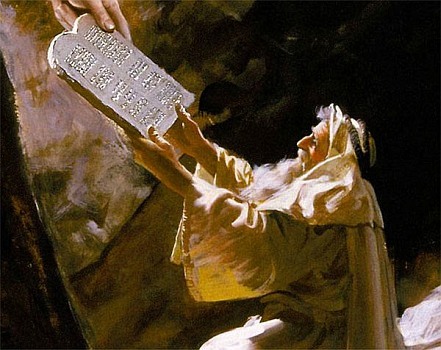
The whole purpose of the Exodus is not just to give God's people the Promised Land, but to give them the freedom to worship Him (in whatever way He requests): "Let my people go that they may serve me in the wilderness." (Ex 7:16) [Not: "Let my people go that I may give them land."] "The only goal of the Exodus is shown to be worship, which can only take place according to God's measure." [16] They don't know the means by which God wishes them to worship Him--only out in the wilderness will they be given that knowledge. [They had to take every person and everything they owned, so that they would be prepared to worship God in whatever way He wanted.] "The land is given to the people to be a place for the true worship of the true God." [17] God makes a covenant with His people and "concretiz[es it] in a minutely regulated form of worship . . . [this form of worship shows them] how to worship God in the way He Himself desires." [17] [God tells them how He wants to be worshipped. They don't make it up on their own.] This worship is an entire way of life. It includes both "cult, [which is] liturgy in the proper sense," [17] and morality, the proper way to live. "Ultimately is it the very life of man, man himself as living righteously, that is the true worship of God, but life only becomes real life when it receives its form from looking toward God. Cult exists in order to communicate this vision and to give life in such a way that glory is given to God."[18] [Don't get confused with the popular definition of "cult"--something like a strange or evil group of fanatics. Cult means ritual. We worship in a ritualistic liturgy because that is what we have received from God. Those rituals draw us out of our daily lives, point us toward God, and allow us to receive His life. Only by looking toward God can we get the proper perspective of how to live the rest of our lives (and live them to the fullest). Without that orientation towards God, life is like being in a maze, but not knowing where the end is--there is no goal to direct our actions to the proper end. We have received the rituals for worship from God and from His Church. It is not something that we invent out of our creativity. Our worship is affective because it was given to us by God as a foretaste of how we will worship Him in Heaven.]
Worship, Law & Ethics
"Worship, law, and ethics are inseparably interwoven." [18] Law must be founded in morality and both must be oriented toward God, otherwise they trap man in a world-centered vision, forcing him to bow to the whims of the ruling majority, rather than the all-good, unchanging truths of God. People need law so that they may be free to live and worship. "God has a right to a response from man." [19] Law must preserve this right, otherwise man cannot live the life for which he was made. "When human affairs are so ordered that there is no recognition of God, there is a belittling of man." [19] The Israelites were given regulations for both cult and morality at Sinai. "This and this alone is what makes the land a real gift." [19] If Israel sticks to these regulations, she is free; if not, she loses her freedom. "When the loss of law becomes total, it ends in the loss even of land . . . steadfast adherence to the law of God . . . must be the necessary condition [foundation of existence] for life in community and freedom." [20] [Proper worship directs us to God, who allows us to see how to live properly. That orientation toward God forms our morality/ethics. Law exists to encourage people toward right conduct (virtue) and discourage people from vice. Without proper worship, we are trapped in a mindset that thinks only of this world and its concerns. It fails to see things from the God's perspective and what is eternally best for our souls. Without the true goal in mind, our efforts can easily become misguided. Many of our civil law makers have lost the proper perspective, or have been trained in an environment which rejects God, and therefore, rejects the proper goal of all of life. Law should protect and promote worship, but that is far too often not the case in our society.]
The importance of worship.
Cult, then, "goes beyond the action of the liturgy . . . embrac[ing] the ordering of the world of human life." [20] Worship is "man glorifying God" and man does this "when he lives by looking toward God." [20] Law and ethics must be "anchored in the liturgical center and inspired by it." [20] Man's relationship with God (liturgy) must first be right before his other relationships (with other men, with creation - law, ethics) can be rightly ordered. [God gives man his relational orientation. Man must first encounter the Truth, Goodness, Justice, Love that God is in order to know how to be truly true, good, just and loving.] "The right kind of cult, or relationship with God, is essential for the right kind of human existence in the world. It is so precisely because it reaches beyond everyday life." Worship takes us out of the world and gives us a taste of Heaven. Life without that foretaste is empty, so those without true cult end up creating 'their own forms of cult, though, of course, they can be only an allusion and strive in vain by bombastic trumpeting, to conceal their nothingness." [21]
 [I'm reminded of this at the end of every Super Bowl (or other sports finales). The whole profession is "bombastically trumpeted" with fancy graphics, lively commentators, jarring music, and memorabilia galore, which all conceal their real nothingness. I used to be a devout follower of the worship of football. Ever since I was introduced to it, I have loved to play the game, so it only naturally followed that I would love to watch the professionals play the game. Growing up, my family had our Sunday tradition of watching the games together. I was enthralled by the games, looking up statistics, buying the video games, collecting the cards, and eventually playing fantasy football. None of these are bad in themselves, but they can become dominant foci in someone's life--as it did in mine. Every year, though, as the confetti paper fluttered in the air to mark the end of that year's Super Bowl, something about it seemed anti-climactic. All this build up throughout the year (and intensifying as the game day drew nearer) seemed to leave me with an empty feeling when the game was accomplished. As the years went by, that emptiness pointed to something: all the hype around this contest is really hiding that it's just a game. It's entertaining to watch them compete, but the flashy decorations are all ways that they try to make the game seem as though it has some great importance.]
We must receive worship, not create it.
True Worship is the worship that God reveals. Man cannot "creatively" plan worship how he wishes. It must be received, otherwise "man is clutching empty space." [21] "Real liturgy implies that God reveals how we can worship him . . . [in bad liturgy] worship is no longer going up to God, but drawing God down into one's own world." [22] He gives, as an example, the Golden Calf narrative--the people created their own version of God and worshipped him how they felt like worshipping him. They weren't patient enough to receive the proper form of worship from God. Ratzinger says that this narrative "is a warning about any kind of self-initiated and self-seeking worship." [23] When man tries to create his own worship, "man is using God . . . a festival of self-affirmation. Instead of being worship of God, it becomes a circle closed in on itself . . . no longer concerned with God but with giving oneself a nice little alternate world, manufactured from one's own resources . . . an apostasy in sacral disguise. All that is left in the end is frustration, a feeling of emptiness. There is no experience of that liberation which always takes place when man encounters the living God." [23] [Here, Ratzinger turns the spotlight from the banal pursuits of secular society's worship of empty things to those who try to impose such empty things into the received worship of God (particularly the Mass). This is one of the greatest travesties of our time. As we saw above, man needs proper worship, so that he can be directed outside of himself and rightly oriented to God (and thereby rightly oriented to all of creation), yet so often today, people who style themselves as "liturgists" try to turn this received worship into a display of their own "creativity." In doing so, they turn the focus of the liturgy away from God and onto the people (either the ones performing the "creative" innovation or the community gathered in the pews). Later, Ratzinger will describe this as "replacing the true essence of the liturgy with a kind of religious entertainment." How true his words are! All too often, I have attended Masses where it seems like the priest is trying to entertain the people instead of point them toward almighty God. The few I have questioned about this have made comments about "not wanting to be too 'high Church' for the people" or "wanting to make people feel welcome," etc. This makes me sick. I can't believe that someone would forego thousands of years of cultivated Church practice (based on revelation and handed on to us faithfully by the Magisterium and which has drawn countless people toward sainthood) for the sake of what amounts to creature comforts. It becomes a form of settling for the lowest common denominator instead of a pursuit of what is highest.]
The importance of worship.
Cult, then, "goes beyond the action of the liturgy . . . embrac[ing] the ordering of the world of human life." [20] Worship is "man glorifying God" and man does this "when he lives by looking toward God." [20] Law and ethics must be "anchored in the liturgical center and inspired by it." [20] Man's relationship with God (liturgy) must first be right before his other relationships (with other men, with creation - law, ethics) can be rightly ordered. [God gives man his relational orientation. Man must first encounter the Truth, Goodness, Justice, Love that God is in order to know how to be truly true, good, just and loving.] "The right kind of cult, or relationship with God, is essential for the right kind of human existence in the world. It is so precisely because it reaches beyond everyday life." Worship takes us out of the world and gives us a taste of Heaven. Life without that foretaste is empty, so those without true cult end up creating 'their own forms of cult, though, of course, they can be only an allusion and strive in vain by bombastic trumpeting, to conceal their nothingness." [21]
 [I'm reminded of this at the end of every Super Bowl (or other sports finales). The whole profession is "bombastically trumpeted" with fancy graphics, lively commentators, jarring music, and memorabilia galore, which all conceal their real nothingness. I used to be a devout follower of the worship of football. Ever since I was introduced to it, I have loved to play the game, so it only naturally followed that I would love to watch the professionals play the game. Growing up, my family had our Sunday tradition of watching the games together. I was enthralled by the games, looking up statistics, buying the video games, collecting the cards, and eventually playing fantasy football. None of these are bad in themselves, but they can become dominant foci in someone's life--as it did in mine. Every year, though, as the confetti paper fluttered in the air to mark the end of that year's Super Bowl, something about it seemed anti-climactic. All this build up throughout the year (and intensifying as the game day drew nearer) seemed to leave me with an empty feeling when the game was accomplished. As the years went by, that emptiness pointed to something: all the hype around this contest is really hiding that it's just a game. It's entertaining to watch them compete, but the flashy decorations are all ways that they try to make the game seem as though it has some great importance.]
We must receive worship, not create it.
True Worship is the worship that God reveals. Man cannot "creatively" plan worship how he wishes. It must be received, otherwise "man is clutching empty space." [21] "Real liturgy implies that God reveals how we can worship him . . . [in bad liturgy] worship is no longer going up to God, but drawing God down into one's own world." [22] He gives, as an example, the Golden Calf narrative--the people created their own version of God and worshipped him how they felt like worshipping him. They weren't patient enough to receive the proper form of worship from God. Ratzinger says that this narrative "is a warning about any kind of self-initiated and self-seeking worship." [23] When man tries to create his own worship, "man is using God . . . a festival of self-affirmation. Instead of being worship of God, it becomes a circle closed in on itself . . . no longer concerned with God but with giving oneself a nice little alternate world, manufactured from one's own resources . . . an apostasy in sacral disguise. All that is left in the end is frustration, a feeling of emptiness. There is no experience of that liberation which always takes place when man encounters the living God." [23] [Here, Ratzinger turns the spotlight from the banal pursuits of secular society's worship of empty things to those who try to impose such empty things into the received worship of God (particularly the Mass). This is one of the greatest travesties of our time. As we saw above, man needs proper worship, so that he can be directed outside of himself and rightly oriented to God (and thereby rightly oriented to all of creation), yet so often today, people who style themselves as "liturgists" try to turn this received worship into a display of their own "creativity." In doing so, they turn the focus of the liturgy away from God and onto the people (either the ones performing the "creative" innovation or the community gathered in the pews). Later, Ratzinger will describe this as "replacing the true essence of the liturgy with a kind of religious entertainment." How true his words are! All too often, I have attended Masses where it seems like the priest is trying to entertain the people instead of point them toward almighty God. The few I have questioned about this have made comments about "not wanting to be too 'high Church' for the people" or "wanting to make people feel welcome," etc. This makes me sick. I can't believe that someone would forego thousands of years of cultivated Church practice (based on revelation and handed on to us faithfully by the Magisterium and which has drawn countless people toward sainthood) for the sake of what amounts to creature comforts. It becomes a form of settling for the lowest common denominator instead of a pursuit of what is highest.]
 |
| Good liturgy: solemn, dignified, beautiful, inspiring, directing us beyond ourselves/daily life and toward God It orients us to a proper relationship with God. |
 |
| Bad liturgy: campy, showy, people-centered, uninspiring, banal, base, empty . . . "It becomes a feast that the community gives itself, a festival of self-affirmation. Instead of being worship of God, it becomes a circle closed in on itself: eating drinking and making merry . . . no longer concerned with God but with giving oneself a nice little alternative world, manufactured from one's own resources . . . an apostasy in sacral disguise. All that is left in the end is frustration, a feeling of emptiness." [23] |
Saturday, February 26, 2011
M.A. Thesis Presentation
Below is a video of the presentation of my M.A. thesis: Sacrificial Aspects Of The Eucharist And Marriage.
Part 1 (10:00)
Part 2 (10:00)
Part 3 (4:36)
Thursday, November 25, 2010
Ad Orientem

It’s not just for the Extraordinary Form
(commonly called the “Latin Mass”)
Quotes from the book The Spirit of the Liturgy by Joseph Cardinal Ratzinger
(then Prefect of the Congregation of the Doctrine of Faith, now Pope Benedict XVI)
The History
Before Christ
The Jews saw the synagogue in relation to the Temple. The synagogue was never just a place for instruction, a kind of religious classroom. No, its orientation was always toward the presence of God. Now, for the Jews, this presence of God was (and is) indissolubly connected with the Temple. Consequently, the synagogue was characterized by two focal points. The first is the “seat of Moses” . . . The seat of Moses does not stand for itself and by itself, nor is it simply turned toward the people. No, the rabbi looks--as does everyone else in the synagogue--toward the Ark of the Covenant, or rather the shrine of the Torah, which represents the lost Ark. [64]
The Ark points beyond itself, to the one place of its presence that God chose for himself--the Holy of Holies in the Temple in Jerusalem... The rabbi and the people gaze at the “Ark of the Covenant”, and in so doing, they orient themselves toward Jerusalem, turn themselves toward the Holy of Holies in the Temple as the place of God’s presence for his people. [66]

The worshipper no longer looks toward Jerusalem . . . Christians look toward the east, the rising sun. [68]
In the early Church, prayer toward the east . . . was always regarded as an essential characteristic of Christian liturgy (and indeed of private prayer). This “orientation” of Christian prayer has several different meanings. Orientation is, first and foremost, a simple expression of looking to Christ as the meeting place between God and man. The word “orientation” comes from oriens, “the East”. “Orientation” means “east-ing”, turning toward the east. [68-69]
The sign of the Son of Man, of the Pierced One, is the Cross, which has now become the sign of victory of the Risen One. Thus the symbolism of the Cross merges with that of the east. [69]
On the altar, what the Temple had in the past foreshadowed is now present in a new way . . . it takes that community beyond itself into the communion of saints of all times and places . . . the altar is the place where heaven is opened up. It does not close off the church, but opens it up--and leads it into the eternal liturgy. [71]
The cosmic symbol of the rising sun expresses the universality of God above all particular places and yet maintains the concreteness of divine revelation. [76]
 |
| Pope Benedict XVI often celebrates Mass ad orientem. |
The Confusion
Despite all the variations in practice that have taken place far into the second millennium, one thing has remained clear for the whole of Christendom: praying toward the east is a tradition that goes back to the beginning. [75]
The controversy in our own century was triggered by another innovation. Because of topographical circumstances, it turned out that St. Peter’s faced west. Thus, if the celebrating priest wanted--as the Christian tradition of prayer demands--to face east, he had to stand behind the people and look--this is the logical conclusion--toward the people. For whatever reason it was done, one can also see this arrangement in a whole series of church buildings within St. Peter’s direct sphere of influence. The liturgical renewal in our century took up this alleged model and developed from it a new idea for the form of liturgy. The Eucharist--so it was said--had to be celebrated versus populum(toward the people). The altar--as can be seen in the normative model of St. Peter’s--had to be positioned in such a way that priest and people looked at each other and formed together the circle of the celebrating community . . . . [But] the Council [Vatican II] said nothing about “turning toward the people.” [77]
Despite all the variations in practice that have taken place far into the second millennium, one thing has remained clear for the whole of Christendom: praying toward the east is a tradition that goes back to the beginning. [75]
The controversy in our own century was triggered by another innovation. Because of topographical circumstances, it turned out that St. Peter’s faced west. Thus, if the celebrating priest wanted--as the Christian tradition of prayer demands--to face east, he had to stand behind the people and look--this is the logical conclusion--toward the people. For whatever reason it was done, one can also see this arrangement in a whole series of church buildings within St. Peter’s direct sphere of influence. The liturgical renewal in our century took up this alleged model and developed from it a new idea for the form of liturgy. The Eucharist--so it was said--had to be celebrated versus populum(toward the people). The altar--as can be seen in the normative model of St. Peter’s--had to be positioned in such a way that priest and people looked at each other and formed together the circle of the celebrating community . . . . [But] the Council [Vatican II] said nothing about “turning toward the people.” [77]
Quoting Vogel: “Even when the orientation of the church enabled the celebrant to pray turned toward the people, when at the altar, we must not forget that it was not the priest alone who, then, turned East: it was the whole congregation, together with him.” [79]
The common turning toward the east was not a “celebration toward the wall”; it did not mean that the priest “had his back to the people”: the priest himself was not regarded as so important. For just as the congregation in the synagogue looked together toward Jerusalem, so in the Christian liturgy the congregation looked together “toward the Lord.” As one of the fathers of Vatican II’s Constitution on the Liturgy, J.A. Jungmann, put it, it was much more a question of priest and people facing in the same direction, knowing that together they were in a procession toward the Lord. They did not close themselves into a circle; they did not gaze at one another; but as the pilgrim People of God they set off for the Oriens, for the Christ who comes to meet us. [80]
The common turning toward the east was not a “celebration toward the wall”; it did not mean that the priest “had his back to the people”: the priest himself was not regarded as so important. For just as the congregation in the synagogue looked together toward Jerusalem, so in the Christian liturgy the congregation looked together “toward the Lord.” As one of the fathers of Vatican II’s Constitution on the Liturgy, J.A. Jungmann, put it, it was much more a question of priest and people facing in the same direction, knowing that together they were in a procession toward the Lord. They did not close themselves into a circle; they did not gaze at one another; but as the pilgrim People of God they set off for the Oriens, for the Christ who comes to meet us. [80]

The Solution
Everyone joins with the celebrant in facing east, toward the Lord who is to come. [72]
Looking at the priest has no importance. What matters is looking together at the Lord. It is not now a question of dialogue but of common worship, of setting off toward the One who is to come. What corresponds with the reality of what is happening is not the closed circle but the common movement forward, expressed in a common direction for prayer. [81]
Wherever possible, we should definitely take up again the apostolic tradition of facing the east, both in the building of churches and in the celebration of the liturgy. [70]
It must be plainly evident that the oratio [the Eucharistic Prayer] is the heart of the matter, but that it is important precisely because it provides a space for the actio of God. Anyone who grasps this will easily see that it is not now a matter of looking at or toward the priest, but of looking together toward the Lord and going out to meet him. [174]
Monday, November 8, 2010
Another Courageous Priest Attempts Ad Orientem

I just read over at Reverend Know-it-all's blog that he was sampling the traditional posture of offering the Mass Ad Orientem. [Sigh] How I miss the solemnity of the Ad Orientem liturgies of Holy Rosary Parish in Cedar, MI and Ave Maria Oratory, Ave Maria, FL!
It is so refreshing (uplifting, honest, directed, etc.) to have the priest facing the same direction as the congregation when he is addressing God. It only makes sense: face the people when you talk to the people; face God when you talk to God.
The good Reverend Know-it-all called it "one of the most beautiful experiences of [his] priestly life." He also hinted at some big issues with Versus Populum (facing the people):
- How difficult it is to face a congregation of people and not address them when trying to address God the Father
- The temptation to be a performer instead of a priest
- The lack of any Vatican directive to face the people
If you haven't experienced this before, or if someone lied to you and called it "the priest turning his back on the people," I urge you to be open to it. See why Cardinal Ratzinger wrote:
Wherever possible, we should definitely take up again the apostolic tradition of facing east, both in the building of churches and in the celebration of the liturgy.
Spirit of the Liturgy, p.70
Praying toward the East,
- Casey
Sunday, June 13, 2010
Good Liturgy Matters
It has come more and more to my attention lately just how much good liturgy matters. The other day a man brought to me a question. He was worried about his 13 year-old son who was being invited by his friends to their non-denominational community service. He was worried that his son would be allured by the excitement of their services. He wondered what we can do to keep people like his son in the Church.
Let me begin by stating that this is a good concern. Not all communities are the same. Only at Mass in the Catholic Church (and Orthodox Churches) do we offer the form of worship that God Himself gave us. In them, the sacrifice of Jesus on the cross is made present and re-offered to the Father. Only in these liturgies do the bread and wine become the Body and Blood of Jesus. Only in these liturgies are we following Jesus' command to "do this" (that is, consecrate bread and wine into His Body and Blood) "in memory of Him." Every community that calls itself "Christian" has elements of the Church, but the fullness of the Church only subsists in the Catholic Church. This man is seriously concerned about his son. He fears that his son might be falling away from this fullness because of the exciting services of the other denominations.
I assured him that what is needed is a firm grounding in the truth. His son may be attracted by flashing lights, fast-beated music, people-centered gatherings, etc., but these things are fleeting. People are drawn to them because these things can be entertaining. They are what our society holds up as important and interesting, but they are empty. People may be attracted to them at first, but they do not last because they don't draw us into something that is an infinitely deep well: eternal Truth. We don't go to Church in order to be entertained, we go to worship God in the way He, Himself, gave us. We do this because God is worthy of worship and this is the only form of worship that is really adequate. By participating in the sacrifice of the Mass and receiving Holy Communion, we are literally united to God and each other through the bond of the sacrament of the Eucharist. This is what makes us the Church, the Body of Christ. We become His Body by re-offering and consuming His Body. The Church has, over the centuries, cultivated that which is best in the human element of Her liturgy to highlight and draw us deeper into this divine part of Her liturgy. The Church passes down this patrimony of liturgy and it is not to be disregarded in favor of a more "entertaining" liturgy.
Today, there are many people who think that the Church must change Her liturgy to be more like the non-denominational communities. I can't count the number of times I've heard ideas that we should be more "up-beat," "contemporary," or something of the like. This makes me sad because I know that this mentality has pervaded much of the Church and many people who call themselves "liturgists" have been taken by this type of thought. Just recently, I have been waking up to realize why it is that I knew so little about my faith while I was growing up. There were many factors, that is true, but the more I have been experiencing lost elements of the Church's liturgical patrimony (Gregorian chant, incense, the Ad Orientem posture, good Church architecture, etc.), the more I see that I wasn't being drawn into eternal truth as well as I could have been. These elements of good liturgy are all much more effective (than many contemporary rejections of our patrimony) in teaching the faithful about God and conforming us to Him (and all of reality) through our worship.
If you want people to take the Church seriously, I think that is has to start with good liturgy. We must celebrate it in the most reverent fashion we can. The most reverent way to worship is by obedience to the Church and Her official liturgical documents, all of which encourage the use of those things which make us distinctively Catholic. Architecturally, this means (among many things) having the tabernacle, altar and crucifix as the focal point of the Church--we should be concentrating on them, not on ourselves, nor on the priest. Musically, this means chanting the Mass parts and chanting the antiphons instead of replacing them with hymns.
There are many other elements of the Catholic Mass that are particularly Catholic (incense, bells, kneeling, etc.). We need to not compromise on these things. The Mass is something other than secular life. The elements that people often try to bring into the Mass from other communities are secular things. We should be trying to keep the Mass from being watered-down by such elements.
Too often, in many of our parishes, the Mass has been considerably watered down. People are not being drawn in to contemplate eternal truths. Often they're not even being fed deep truths from the pulpit. The whole liturgy should be drawing us in with these time-tested elements contained within Catholic patrimony.
When the man approached me with his concern, it was in the context of catechesis, so my first thought was to talk to him about the necessity of teaching the uncompromising truth in our catechetics classes and throughout the whole of our lives with everything we do--particularly in going to Eucharistic adoration and reverencing Jesus in the Eucharist by genuflecting when we come into His presence and crossing ourselves when we pass His houses. I didn't think much about it at the time, but it has been more and more on my mind since we talked that I should have really said more about stressing good liturgy. I also should have mentioned that he should be careful in his home life of that on which he places importance. If he places importance on flashy entertainment in the home, his son will be even more susceptible to be drawn into a "worship" that includes such entertainment pieces, but that is a post for another time.
Striving for ever greater fidelity to God through His Church and Her worship,
- Casey

Let me begin by stating that this is a good concern. Not all communities are the same. Only at Mass in the Catholic Church (and Orthodox Churches) do we offer the form of worship that God Himself gave us. In them, the sacrifice of Jesus on the cross is made present and re-offered to the Father. Only in these liturgies do the bread and wine become the Body and Blood of Jesus. Only in these liturgies are we following Jesus' command to "do this" (that is, consecrate bread and wine into His Body and Blood) "in memory of Him." Every community that calls itself "Christian" has elements of the Church, but the fullness of the Church only subsists in the Catholic Church. This man is seriously concerned about his son. He fears that his son might be falling away from this fullness because of the exciting services of the other denominations.
I assured him that what is needed is a firm grounding in the truth. His son may be attracted by flashing lights, fast-beated music, people-centered gatherings, etc., but these things are fleeting. People are drawn to them because these things can be entertaining. They are what our society holds up as important and interesting, but they are empty. People may be attracted to them at first, but they do not last because they don't draw us into something that is an infinitely deep well: eternal Truth. We don't go to Church in order to be entertained, we go to worship God in the way He, Himself, gave us. We do this because God is worthy of worship and this is the only form of worship that is really adequate. By participating in the sacrifice of the Mass and receiving Holy Communion, we are literally united to God and each other through the bond of the sacrament of the Eucharist. This is what makes us the Church, the Body of Christ. We become His Body by re-offering and consuming His Body. The Church has, over the centuries, cultivated that which is best in the human element of Her liturgy to highlight and draw us deeper into this divine part of Her liturgy. The Church passes down this patrimony of liturgy and it is not to be disregarded in favor of a more "entertaining" liturgy.
Today, there are many people who think that the Church must change Her liturgy to be more like the non-denominational communities. I can't count the number of times I've heard ideas that we should be more "up-beat," "contemporary," or something of the like. This makes me sad because I know that this mentality has pervaded much of the Church and many people who call themselves "liturgists" have been taken by this type of thought. Just recently, I have been waking up to realize why it is that I knew so little about my faith while I was growing up. There were many factors, that is true, but the more I have been experiencing lost elements of the Church's liturgical patrimony (Gregorian chant, incense, the Ad Orientem posture, good Church architecture, etc.), the more I see that I wasn't being drawn into eternal truth as well as I could have been. These elements of good liturgy are all much more effective (than many contemporary rejections of our patrimony) in teaching the faithful about God and conforming us to Him (and all of reality) through our worship.
If you want people to take the Church seriously, I think that is has to start with good liturgy. We must celebrate it in the most reverent fashion we can. The most reverent way to worship is by obedience to the Church and Her official liturgical documents, all of which encourage the use of those things which make us distinctively Catholic. Architecturally, this means (among many things) having the tabernacle, altar and crucifix as the focal point of the Church--we should be concentrating on them, not on ourselves, nor on the priest. Musically, this means chanting the Mass parts and chanting the antiphons instead of replacing them with hymns.
"All other things being equal, Gregorian chant holds pride of place because it is proper to the Roman Liturgy."
- GIRM 41
There are many other elements of the Catholic Mass that are particularly Catholic (incense, bells, kneeling, etc.). We need to not compromise on these things. The Mass is something other than secular life. The elements that people often try to bring into the Mass from other communities are secular things. We should be trying to keep the Mass from being watered-down by such elements.
Too often, in many of our parishes, the Mass has been considerably watered down. People are not being drawn in to contemplate eternal truths. Often they're not even being fed deep truths from the pulpit. The whole liturgy should be drawing us in with these time-tested elements contained within Catholic patrimony.
When the man approached me with his concern, it was in the context of catechesis, so my first thought was to talk to him about the necessity of teaching the uncompromising truth in our catechetics classes and throughout the whole of our lives with everything we do--particularly in going to Eucharistic adoration and reverencing Jesus in the Eucharist by genuflecting when we come into His presence and crossing ourselves when we pass His houses. I didn't think much about it at the time, but it has been more and more on my mind since we talked that I should have really said more about stressing good liturgy. I also should have mentioned that he should be careful in his home life of that on which he places importance. If he places importance on flashy entertainment in the home, his son will be even more susceptible to be drawn into a "worship" that includes such entertainment pieces, but that is a post for another time.
Striving for ever greater fidelity to God through His Church and Her worship,
- Casey

Subscribe to:
Posts (Atom)